Monday, November 29, 2010

Eurozone Debt Crisis: Bailout for Ireland

Austerity, that is - a mindset usually coupled with deficit-cutting policies and fiscal conservancy - is now politically popular. Moreover, it is a part of Ireland's economic agenda. Read my report below for the scoop.

Also here's a question to pick on: if Ireland's government could enforce their own fiscal policy instead of the EU's central bank, would they be more Keynesian than Austerian? I don't think so, but I've never been to Ireland! Anyway, read my report below for the scoop. Note the bibliography, as well. They were good sources for coming up with all the objective information

--

Following a property bubble that began in late 2007 and burst in 2008, Ireland joined one of many nations in the worldwide financial crisis. The crash caused the housing sector to experience a decline of 35% in property values from 2007 to 2010. Like the US housing crisis, homeowners suffered severe losses in equity. Angela Merkel, along with German officials, spearheaded the move to persuade Ireland to accept a bailout. By November 2010, the European Union recommended that Ireland accept a bailout projected at €85B. Ireland’s government conceded and its prime minister Brian Cowen publicly announced on November 21, 2010 that they would accept the stimulus aid package.

Ireland’s government has already intervened by nationalizing its four major commercial banks, including Allied Irish Banks and the Bank of Ireland. Prior to the bailout, the country had a fairly low deficit – by the end of September 2007, it had been approximately €3.1B. Now, the deficit hovers between €20-21B. Despite the government insisting that public services cuts are favored over raises in income tax, the Euro Stability and Growth Pact’s target of having a reduced deficit of 3% of GDP by 2013 seems unlikely. €4B worth of new taxes and spending cuts – consisting of the layoffs of 24,750 public workers – has been announced and is speculated to go into effect by the end of the fiscal year.

Austerity has gained momentum as Irish taxpayers face further tax increases and budget cuts in subsidized public programs – education, healthcare, etc. Moreover, Ireland’s European neighbors - this including French finance minister Christine Lagarde - urge the government to raise the 12.5% corporate tax. According to a report by Goldman Sachs, “companies in Ireland face the lowest effective tax burden of the euro-zone's 12 larger countries.” (page number not given) Consumer confidence is in effect, at a low. Higher taxes, high unemployment rates, and plummeting income levels will not be conducive towards boosting spending.

Economists who have paid keen interest to the debacle of the “PIGS” countries, such as Paul Krugman, have shed light on the differences between Iceland’s and Ireland’s financial meltdowns. He argues that while Iceland could directly influence its native currency, the krona, by devaluation, Ireland cannot do so for the Euro. They have virtually no control over interest rates or the money supply, let alone monetary policy. Importantly, Iceland did not pass on debt to their taxpayers via default on bad loans. Ireland did the opposite by bailing out their banks. In accordance with IMF logic, private sector defaults tend to lead to market declines in external debt. In addition, Iceland implemented capital controls which limited residents from transferring funds out of the country. Krugman’s analysis confirms that Ireland’s government has little choice in deficit cutting, and that the EU – due to its regulations - must fashion its policy for Ireland, as oppose to the country self-prescribing its own economic policy.

With respect to the Euro and the foreign exchange market, the EU has been readily available to provide emergency credit lines to its members. The Euro hit record lows throughout this year, dropping along the dollar, which contrasted with record high bond yields. Yields on 10-year bonds added 31 basis points to 9.07 percent. Wary of the instability of the Euro, senior officials are now proposing that the €750B rescue net should be increased, if necessary. Portugal and Spain are next on the list of countries that may need a bailout.

Economics has an underlying goal of full employment of people and capital. Today, there is very little capital to be employed and jobs are being lost at a rapid pace. Increased emigration from Ireland is a bitter fact among many natives that are now forced to leave their home country in search of work. Irish immigration in America is up 25% from last October (here is a relevant article). Austerian policies are politically popular, but will not work in fighting deficits; or at least, the plan at which the Irish government has is bound to have little effect in restoring consumer confidence. Prior to the acceptance of a bailout, Ireland’s government officials speculated as to whether defaulting and restructuring would be a better choice of action. By accepting the bailout, they have now passed the point of no return.

Bibliography

Finfacts Team. "Irish Exchequer Deficit in First Nine Months of 2007 at €3.1 Billion; Shortfall on Tax for the Year to Be between €1 and €1.5 Billion." Finfacts Ireland. 2 Oct. 2007. Web. 26 Nov. 2010. .

Clarke, Jody. "Irish Property Crash: Is Ireland Heading for Recession - MoneyWeek." Investing, Investment Advice, Financial News & More - MoneyWeek. 3 Oct. 2007. Web. 25 Nov. 2010. .

"Metronews - Article." Metro- Choose Your City. 23 Nov. 2010. Web. 27 Nov. 2010. .

Alderman, Liz. "Ireland Unveils Austerity Plan to Help Secure Bailout." The New York Times. 24 Nov. 2010. Web. 25 Nov. 2010..

Brussels, Traynor In. "Ireland Bailout: Fears Mount That Eurozone Fund Is Too Small | Business | The Guardian." Latest News, Comment and Reviews from the Guardian | Guardian.co.uk. 25 Nov. 2010. Web. 25 Nov. 2010. .

Czuczka, Tony. "European Ministers Hold Ireland Debt Crisis Talks at G-20 - Bloomberg." Bloomberg - Business & Financial News, Breaking News Headlines. 12 Nov. 2010. Web. 25 Nov. 2010. .

Juergen, Baetz, and Eddy Melissa. "Merkel, Sarkozy Want Quick Bailout for Ireland - Yahoo! News." The Top News Headlines on Current Events from Yahoo! News. 25 Nov. 2010. Web. 25 Nov. 2010. .

Krugman, Paul. "Eating the Irish." The New York Times. 25 Nov. 2010. Web. 26 Nov. 2010. .

Horobin, William. "French Finance Minister: Ireland Should Use Taxes In Deficit Cutting - WSJ.com." Business News & Financial News - The Wall Street Journal - WSJ.com. 23 Apr. 2010. Web. 26 Nov. 2010. .

Friday, October 29, 2010

rant

NYTimes op-ed columnist Paul Krugman writes articles that seem to be getting more and more desperate. Cool-headed Americans must appreciate the result of our administration's policies causing fiscal conservancy to be the new big thing (again). As elections draw near, we are seeing more and more right-wing sentiment - one could call it bigotry - being implemented in Republican campaigning. The Tea Party claims to possess the same agenda and principles that our founding founders made fundamental when working on project America. But aside from fiscal conservancy, did they not also advocate for social liberty, or at least plant the seeds for a unified people, each person imbued with the same rights as the other? And did not Alexander Hamilton, our nation's first secretary of the treasury, advocate for a pragmatic approach to stabilizing America - that is, possessing more centralized power, perhaps having knowledge of the irrationality of the masses, let alone human beings? We see that Democrats and Republicans both echo different values our founding fathers possessed. The Republican party's identity has degenerated - thanks to Bush Jr, his administration's wartime blunders, and the past 20 years of Friedman/Rand-esque financial market liberty and greed. But now, globalization and foreign trade has changed the entire nature of politics. Global terms of trade. Debt, to name a few.

Past the Cold War, we no longer have a common enemy that we can point the finger at. In the past generation, mob mentality fueled anti-Communist sentiment. Capitalism was Americanism. Americanism was capitalism. And now, to witness a declining America - a multi-ethnic America where WASP elites are now sensing a threat to their own seats of power - and to see the big whigs taking action with a very visible hand is disturbing to them. Economic contraction is appropriate, they feel. But pragmatic contraction would be even better, for shrinking our economy relative to the world market. We have no exit strategy. We just never expected that there would be repercussions for the collective practice of living beyond our means.

One thing that comes to mind is what Obama said: "History never precisely repeats itself"

Not blind to his inevitable perceived shortcomings upon taking up the presidency, Mr. Spock knew that change would not happen overnight. It would be politically impossible to deliver fulfilled promises in two years, let alone appease the masses expectations of those promises. But he sure gave us hope, didn't he?

Continuing on w/ the history lesson and my point - Heavily in debt, following the Revolutionary War, America was in a similar position to the one we are living in now. We live in a crucial time in which we need to prove to the world that we are sustainable. Beyond numbers and troubled finances, we must again show the world that we have the potential to be sustainable, if not in certain sectors of industry (what industries?). It would be wishful thinking to believe that we can return to being no. 1. Yet, if America made it this far, would it not be strange to believe that we can continue? It's crucial that we don't turn back on the social values that have done so much to be inclusive. Aside from economic woes, which apparently every nation has, we must sustain as much grace as we possibly can so that we do not degenerate into a country with the face of bigotry.

Saturday, September 25, 2010

Calamity Ahead (continuation from past post)

China's manipulated devaluation of currency has been subject to much attention, even prompting President Obama to call for a float at the UN. "Experts" believe that the renminbi "is artificially weakened by 20 to 25 percent." Wen Jiabao, including other government officials involved with China's finance ministry, has been avoiding this complaint directly. Let's ask ourselves some basic questions concerning this situation:

1) Why do it? Why devalue the currency?

For starters, they would hope to maintain a long-term trade surplus by doing so. Second, they would probably want to knock their competitors out of the box. Vietnam and other South East Asian countries are capable of producing/manufacturing products that the Chinese export, at an even cheaper price (quality about the same - good; ceteris paribus, just for sake of argument).

2) What are the ramifications of the devaluation of the renminbi?

A constant, lower standard of living. Suppressing the wage of China's massive labor force, that is - they want to keep a cheap, domestic labor force in order to stay #1. The villagers will remain villagers, while the business elite and aristocrats in the cities exploit them collectively (but mostly not consciously, nor intentionally) - this is capitalism. This is not true nationalism, but perhaps, this is how progress is made, at least in the pragmatic sense. This, I believe, is having a negative effect on not just China's domestic population, but the countries who have potential to gain from specialization, emerging countries/markets, fellow developed markets/nations, and etc. This is not to say that there are perhaps positive effects, in terms of international investment - China's interest in Africa and Europe need to be noted. But to what end - short term and long term?

and 3) a bonus question - who are China's friends?

China's ties with US weaken. It makes sense from their point of view that they would view America as loaded with debt. We have indeed unconsciously eaten the words "Too Big to Fail", but when China is in a bind in the future, despite its A-list of importers (Japan - who they are still disputing with over the past World War - South Korea, Taiwan, US, Germany, being the top 5), who will help China? As an economist-in-the-making, I am susceptible to being concerned with social prosperity. Truly wonderful nations have souls. Their legacy means nothing if their people do not have a nation they can live with, consciously support, and in times like these, believe in. Next year, if I am able to make it to Shanghai, I shall try to find new perspective and understand how social prosperity may best be formed there, and probably long-term economic prosperity as well.

--

additional article (op-ed) that contrasts China and US, also lightly making note of the first's modern "5-year plan"

Sunday, August 29, 2010

Upcoming Elections; What's Bothering Me

It has been a while since I have last posted but this time I would like to address an issue at home: the much heated 2010 gubernational elections.

After reading this blog and all of the comments, I couldn't help but feel that the situation here is a torrent of bad data. Here in the 808 (lingo for Hawaii; area code "808"), image is everything for the political candidate. Specifically, its image funneled through endorsements and local news. But many of our denizens here aren't given much information when it comes down to finding out candidates' or incumbents' business plans for their potential term/terms. Nor is their record, in some cases. We don't have the NYTimes or WSJ. We have the Star Advertiser. We must rely off word-of-mouth, which is highly volatile because of personal bias; in a way, it's like playing telephone. Facts can become exaggerated and/or played down. It is hard to find anyone practically anywhere who will examine all sides of the story and then vote not in just their own self-interest, but everyone's (that felt disgusting after recalling many grueling hours of Philosphy 101 freshmen year).

There has been much drama over the previous city council election, concerning Ed Case, who bowed out to Colleen Hanabusa. Speculators felt that his endorsement for Abercrombie and his dogged criticism of Hannemann was the best thing he could do for himself politically. If Hannemann is elected governor, Case's political career is "effectively over", as one of the commentors on the blog put it. Others say that Senator Inouye's criticism of Hannemann's scare tactics was more damage control. If there are two political machines in the US, regardless of state, I would say that they are as follows:

- one Democrat
- one Republican

The coordination of the parties - incumbents and candidates, alike - creates political machines (which isn't necessarily a bad thing). Cooperation is much wanted. It would be nice if we saw Hannemann and Governor Lingle work together more but frankly, it's hard to when you both have different agendas and political parties. Bipartisanship is like a dream here in America, but in Hawaii, it should be a lot simpler. Or harder? We have a lot of different networks here. Ethnic groups, the church, districts, local businesses with money , foreign businesses with money, etc. Its hard to get representation from everyone and then act on what's in the best interest of 80% of the people, as opposed to 5-10%. Anyway, in summary, local politics and a lack of information are what holds back the representation of the majority of our population. This includes people just not voting - but this isn't what truly scares me.

What truly scares me are the scare tactics that the Hannemann team employs. What scare tactics, you ask? Tough 7-foot samoans advising you to vote for a certain candidate? Allocation of millions of $ that help single entities as opposed to a whole district/island? (my stance on the Super Ferry was different; what you did not find in the papers was off-record: Lingle telling Justice Ronald Moon that Hawaii politics has always favored single entities/businesses) This whole rail deal - a $5-6B project that the Fed only gave verbal approval, not written approval that they will back $1.5B? (Even if this does fly, on elevated tracks, no less, remember that "borrowing is but a tax deferred") Backdoor deal making with developers without transparency to the public? Certain pamphlets that discriminate on ethnicity? Indirectly attacking an opponent's spouse? What is this? These practices are perpetuating the world of Hawaii politics with corruption, the exact opposite of our state motto. The young adults and keiki will learn to bully, blackmail, threaten, and use realpolitik in a way that will only seek to fulfill their own ambitions, not the needs of the people, when observing such practices. Never for a moment should we give in to the talk that scare tactics are necessary to accomplish things. Bullying will simply never be progressive. Moreover:

Inclusiveness is Hawaii's strength, not exclusiveness! That's what keeps Hawaii Hawaii. It is important as a voter to again, keep in mind the 80% of Hawaii - hopefully community interests before social interests; I'll let readers discern the two themselves - not 5-10% special interest population network, as well as a long-term Hawaii.

It is for the above reasons I will vote for Neil Abercrombie (as well as Peter Carlisle for mayor). Things won't be perfect under his administration, or any administration for that matter. But right now he's the candidate Hawaii needs to choose in the upcoming elections. He represents more of Hawaii's communities than Hannemann ever will. I strongly urge others to vote for Abercrombie and vote! Even my grandparents in their 90s are politically active and mark my words, they will vote. Every vote makes a difference. Family, friends, and peers will be aware of your beliefs and concerns for Hawaii and take them into consideration

Thursday, June 17, 2010

It's Summer and I'm Taking a Break

Summer Reading that is economics-related:

Too Big To Fail by Andrew Ross Sorkin

The General Theory of Employment, Interest and Money by John Maynard Keynes (possibly)

--

The market is a mess. Consider this a sabbatical
There is no surefire microeconomics equation that can guarantee you economic survival. The only thing to do now is just take a deep breath and just take everything in stride and in moderation. Don't forget that savings = investment almost. Unemployed capital is not good for economies, which is why (on a side note) to make sure to exchange your currency within reasonable time after vacations to other countries.

Have a good summer all. If I feel motivated, I will post, so please motivate me if you see me

Monday, May 3, 2010

Bear and my Macro Final

Here's a Bloomberg article about Bear Sterns getting what comes around. Some years ago, when a hedge fund named Long-Term Capital Management failed and Fed Chairman Alan Greenspan called for the largest US banks to bail it out to prevent ripples from imploding Wall Street, as well as impacting Main Street (due to the Asian Crisis). Bear Sterns refused and the result? Years later, JPMorgan bought Bear at a fairly cheap price. $240M. 6 months are their bailout, Goldman Sachs' competitor Lehman Bros. was allowed to fail. Speaking of which, I watched a good half hour of Lloyd Blankfein's testimony in front of the senate. J McC and co. grilled him and within hours he looked like hell. Warren Buffet's recent defence of Goldman Sachs has been surprising. And this picture made me laugh (inside of course, I'm in the library)

My macroeconomics final exam will cover comparative advantage, specifically the flaws of David Ricardo's Trinity of trade theory (Comparative trade theory, specialization, and the quantum theory of money). The second essay concerns the economic appropriateness and effectiveness of sweat shops. Finally, our last essay will concern our presentation topics - subprime, which I'm kind of sick of. Maybe I'll use my work exp. from this past summer to write up lots of random words, but not randomly matched together. That is all!

Tuesday, April 27, 2010

Nick's 5 L's for Playing the Stock Market (Ethical or Not)

Disclaimer: I am not responsible for you losing money on the stock market. Don't trust the internet. I'm not trying to be Jim Cramer or play Jon Stewart here. I don't feel that people should play the stock market. However, I believe that people should try it once to understand what it's like.

Additional Note: Perhaps these 5 L's + Innovation within the company that outlines what will best work for a company.

--

Legislature

"Free Trade" has never existed. It's naive to believe of its existence, although it's something to be strived toward. Neoclassical economists and thinkers strongly believe in "do what you do best and trade the rest." The matter of the fact is that diversification in your economy is needed to equally divide the risk, hedge-your-funds, and/or survive. If your country is but one industry, you will end becoming like Ireland (potatoes famines and vacant housing! emigration... brain drain - ooh, that sounds like a good topic for the future) or the Ivory Coast. The latter's disaster happened in the 1980s and involved the IMF telling the mired countries of Cameroon, Ghana, and Nigeria to make chocolate. Producing it cheaper than the Ivory Coast, the main supplier of cocoa to Nestle - also the country's main crop - lost favor with the company. Nestle signed up with the above countries and the Ivory Coast went kaput. Subsequently, this happened at the end of the decade, courtesy of alumnus Charles Taylor, who incidentally walked off with a degree in economics

Back on track -

So eventually, if other countries produce the same good or service cheaper and more competitively, like in the above you case, you will end up losing your clientele and you will be forced to either suffer or downsize your economy (along with emigration of indigenous peoples). Anyway, the human race has witnessed a history of governments dictating tariffs, embargoes, and setting up barriers restricting trade. That being said, governments will definitely affect public company's stock. It is, after all, the HAND, visible or not.

Liquidity

Currency is an important thing these days. Also liquidity preference - particular tastes and/or choices in choosing what liquid monies one has. Take the Iceland default. When credit froze, they didn't have enough pounds, Euros, dollars, and whatnot to deal back to their investors/customers. They thought highly of their krona but whether conscious or not of their lack of diversification, they tanked, and the financial market with it, and their investors holdings - which disappeared! Poof! Does your head hurt? OK let's go back. Anyone own a lemonade stand or do student marts? Was there ever a situation where you had to run to your parents or some family member to ask for change?

Location

Real estate adage: "Location. Location. Location." Gotta have it. Is it temperate? Is the weather devoid of blizzards, hurricanes, storms, and climate that would make business unsuitable, facilities inoperable? What of the people that tend to pool around those locations, hm? "Location" speaks for itself. (the concept is also called "inherent comparative advantage" where said nation of location can produce effectively and cheaply, based on factors that are relatively unchangeable - resources, climate, aloha spirit, etc)

Logistics
How would an exporter best smuggle Cohibas from Cuba to the US, disguising them as fake Cohibas? A joke! Let's turn to Wikipedia for this one: "[Logistics] is the management of the flow of goods, information and other resources, including energy and people, between the point of origin and the point of consumption in order to meet the requirements of consumers... Logistics involves the integration of information, transportation, inventory, warehousing, material-handling, packaging, and occasionally security. Packaging - I suppose that has something to do with marketing. Think critically in your mind on that if you're bored.

Labor
Is the work force belleaguered? Are they in a place, where frankly, it's hard to get from point A to point B because of dangerous gangs? Are they associated with friends like such? Are conditions too chaotic to conduct long-term business? Age? Generation? I almost feel that labor should be implied in Logistics

--

That's it. I got a final tomorrow morn'
About the above image... couldn't resist. I only saw the premier for this... season continuation?! They could have started season 2. I don't think I'll get into it until they play a cover I like... oops, this is an economics blog

Wednesday, April 14, 2010

Unknown Calamity Ahead?

Time to finish up where I left off with "Circle of Life" - the predicament of China not allowing its currency to float. Many can argue that damage has been done by their currency peg. If they allowed the currency to float, their economy would be forced to downscale, allowing other South East Asian economies that are rich in resources to replace it, at least in some industrial sectors. The truth is, I don't know what will happen if they keep their currency pegged or if they end up devaluing it again. The feeling I have about it is that the government has a choice for the long run - take lots of damage or marginally less damage. Or maybe, China will revolutionize their economy/financial markets once again. Time will tell.


China's trade surplus dropped by 63% in February, according to their government. The above photo is from telegraph.co.uk

Monday, April 12, 2010

Macroeconomics and Living Beyond Our Means

fyi This article won't be so serious, not concerning figures and numbers.

I would guess that administration within most colleges (especially business schools) want their students to know all about the financial crisis. This makes sense but right now most of us feel like all this information is being crammed down our throats. I am sick of it. I don't want to even talk about it. However, the blog must go on. Noting the past few decades, it seems that the United States, among many other developed countries has forced other countries into converting into an economy where individuals, groups, businesses, and entities alike live off debt. Some say it was the American way. I think that with the creation of banking via the Stonemasons storing soldiers' fortune during the Crusades, it was only inevitable before technology sprung this sucker high into the sky. But it's always worth remembering that space is an illusion, at least in this game. You'll never make it out of the atmosphere. What goes up must come down.


Actually, maybe I'll be eating my words 50 years from now. Maybe a perfect utopia will be created... a Giver-esque world where a pill will be administered and perfectly rational, robot-like human beings will exist. Not. And for this reason, we should be winning more Pulitzers. Come on, America. Stop looking at the screen and IMAGINE (unless you're reading my blog) - deviation from economics.

Hence Keynes belief that a nation must spend their way out of a deficit, we can see that even 19th/20th century (though radical) classical economic thought was within a world of debt. It's amazing to me, and certainly should amaze the world of people who can afford to not live in such a way. Those that live paycheck to paycheck are not the ones maxing out their credit card, buying themselve a new i-(insert whatever thing-noun).

Jon Stewart tearing Jim Cramer a new one, concerning Bear Sterns. Cramer was urging people to buy and many had reason to believe that the man had some stake in the company (or was being paid by the company to support selling).

--

note: found a nice cover illustration for The Giver, will post it after class

Wednesday, March 31, 2010

China and Lion King - The Circle of Life

I had anticipated blogging earlier about China and its pegged currency but here we go. If it were not for its weak yuan, its trade surplus would not be so gargantuan. To put things in perspective, back in 2006, US imports from China totaled to $287.8B. For a decade from 1995 to 2005, the yuan was pegged at 8.28 yuan to the $ (the country's restriction of foreign inflows also is pithy). Around December 2005 - January 2006 the currency lowered again to 8.08 yuan. Today, the exchange rate is now 6.83 yuan to the dollar. Come on, their currency being undervalued is just as obvious as the rigging of Iran's elections. I strongly believe that our trade deficit with China would be at the least, $1T less than it is now if its government had not stepped on the invisible hand, with its visible foot - meaning if it had not pegged the currency and followed the monetarist policies that the US followed (ironically, many people in the US would consider this cheating) its currency would indeed be much higher. Think of the country's currency like a stock. As demand accounts for demand of currency via foreign imports (see "Top Countries China Imports From", as well as "China's Trade Surpluses by Country" and "China's Trade Deficits by Country"). Though there is no rule or true moral basis for a fixed currency being evil - as opposed to a floating currency, which China's ordinary citizens know is nonsense (this is from overhearing a conversation from a Chinese national) - there has been a general consensus in the developed western world that it is unacceptable.


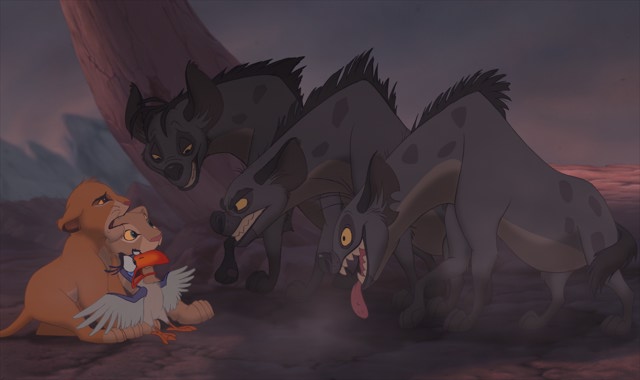
Let me provide an anecdote (in the spirit of Paul Krugman) - let's say the global economy is the circle of life (will come back to this concept later)... say, in Lion King. Substitute the exchange money with the exchange of hunted animals. And for example's sake, let's pretend that the animals at the top of the food chain are very intelligent and know advanced math. They are able to accurately minimize number of hunted animals, while sustaining each animal population. Throughout the year, lions and hyenas are particularly found of eating gazelles and giraffes. Pride Rock and the Shadowlands, the dwelling of the lions and hyenas, respectively, each have a proportionate ratio of gazelles and giraffes. However, of late, many of the giraffes have wandered into Hyena territory.

Let's pretend that the Hyena clan feels that they are being unfairly treated by the lions (just like in the movie; however, keep in mind that China's intentions in fixing their currency is by no means driven by Populist ideal) because they want gazelle and make a deal with the lions via Scar to hunt additional gazelle. The hyenas propose that for every five gazelle they claim, they will allow them one giraffe, an increase from an original three gazelle to one giraffe that was fixed earlier. The Lion clan agrees to these terms but as they are fewer in number in their pride, they do not realize that they will eventually run out of gazelle. Soon, the gazelles start to drop in number at Pride Rock and the hyenas hoard up giraffe, driving them all to the Shadowlands (let's assume plant life is sustainable there). Many innocent lions and lionesses begin to stave. The lions approach the hyenas and request that they adjust their gazelle to giraffe barter to a more even ratio in their favor to even trade, as a trade deficit is now acknowledged by them. The hyenas won't relent, asserting that it is precisely this ratio which sustains their populace, which has increased considerably since when they first made their initial deal. They even go so far as to hunt more gazelle without exchanging giraffe, creating an even more uneven ratio. And because they have made various alliances with other carnivores, supplying them with giraffe, the lions don't have many choices left in bargaining with the hyena. They can now either continue to argue with the hyenas, encourage the other animal herds to pressure them for an adjusted rate of exchange, or fight them, which would be viewed as unacceptable by the rest of the animal kingdom. By the way, the Lion pack represents America.

Note: if anyone wants to make a more accurate model, be my guest. I am aware that gazelles to giraffes aren't the only form of trade that can be made. Ostriches, elephants, edible packaderms, etc can be considered. A flaw with this anecdote is the absence of a "medium of exchange" - money. However, I just really wanted to try this out.

--

My next post will hopefully provide some enlightenment on the potential catastrophe(s) that may be caused by China fixing their artificially valued currency. This including China's economy inability to justify their market and power - superficial as it is. Think of vacancies. Will China's market crash? My professor has called the country "soulless" and I agree, having visited the place. I cannot say the same about Hong Kong, and hope to make a trip out there someday. I don't feel comfortable making inferences on the statuses of other countries without first visiting them and seeing for myself what's what - observation is a crucial thing. There should always be some honor in it to best acquire all data. Anyway, my prof called the country that particular word because most of the country's demographic consists of villagers, peasants, and farmers. It is only the clustered coastal cities that serve as a bastion of centralized wealth - and it is artificial. The counterfeit market makes it harder to figure out China's actual GDP. How can someone in Shanghai make ends meet as a wealthy storekeepr selling counterfeit designer sunglasses while a poverty-level farmer out in the countryside toils day in and day out, creating actual products of worth and necessity? Soulless. I dearly hope that one day countries propel themselves out of this mad paradox.

Monday, March 15, 2010

Jump Start - Visible Hand to Invisible Hand and Labeling Economic Thinkers

From serfdom/feudalism to mercantilism to the industrial revolution to modern day capitalism, the developed world has witnessed the transition from a very visible hand (gov't/administrative intervention) to an invisible hand, and then perhaps back to a visible hand again today. That noted, I believe that economics will always be progressing, thus requiring continuous research in the economics field. I hope to include footnotes, sources, links, and such in my blog so that viewers won't make the assumption that I'm making abstract inferences (or being closed-minded; that is an unwise state of mind for an economist, let alone a person).

After basking in the economics field for a while, one can realize that labels help w/ self-identity in the economics profession (for better or for worse) - what side are you on? With economics, it's a very definite thing. You can be Austrian - a firm believer of the market mechanism with no government intervention in commerce, a Neo-Classicist - the focus being inflation instead of unemployment, a Keynesian - :) , or a Freaknomics clown - where one disregards theory and statistics, thus mistaking correlation for causation, but that's just my bias.

At any rate, anticipate future posts